




Why Does Hair Fall Out More in Autumn? What's Normal and What Isn't
Share
Quick answer: it is common to notice more hair falling out in late summer and autumn. A six-year study of 823 women found that the share of hairs in the resting (telogen) phase peaks in summer, and those hairs are shed two to three months later, in autumn. This seasonal shedding is temporary and usually settles on its own within a few weeks. Losing around 50 to 100 hairs a day is considered normal.
What is seasonal hair shedding?
Each hair follicle runs its own cycle. Most of the time it is in the growth phase (anagen), which lasts several years. It then goes through a short transition phase (catagen) and a resting phase (telogen) of roughly three months, at the end of which the old hair falls out and a new one starts growing in its place.
Because follicles are not synchronised, you are always shedding a few hairs. But when more follicles than usual enter the resting phase at the same time, you notice it a few months later as a wave of shedding. That is what happens seasonally.
What the research shows
A Swiss study published in Dermatology followed 823 healthy women who were worried about hair loss for six years, analysing their hair under the microscope (trichograms). The proportion of hairs in the telogen phase was highest in July, with a smaller peak in spring. Since telogen hairs fall out at the end of that phase, the shedding people noticed came later, in late summer and autumn.
Researchers do not know the exact cause. Changes in daylight hours and sun exposure are the most commonly proposed explanations, but none has been proven. What matters for you is the pattern: an autumn increase in shedding is expected and does not mean your hair is getting thinner.
How many hairs a day is normal?
The American Academy of Dermatology considers shedding 50 to 100 hairs a day normal. You tend to notice more on wash days, because hairs that were already loose come out together in the shower or brush. People with long hair also notice it more, simply because each hair is more visible.
Seasonal shedding or something else? How to tell
| Usually seasonal shedding | Worth checking with a dermatologist |
|---|---|
| It starts in late summer or autumn | It lasts longer than about three months |
| Hair falls out evenly across the head | You see bald patches or a widening parting |
| The scalp looks and feels normal | Itching, redness, scaling or pain on the scalp |
| Your ponytail feels the same thickness | Your ponytail is clearly thinner than a year ago |
| Similar episodes in previous years | It started 2–3 months after illness, surgery, childbirth, a crash diet or a period of intense stress |
That last case has a name: telogen effluvium. A physical or emotional shock pushes many follicles into the resting phase at once, and the shedding appears two to three months later. It is also usually temporary, but it is worth confirming with a professional and ruling out causes such as low iron or thyroid problems.
What you can do during the autumn shed
- Be gentle with your hair. Avoid very tight hairstyles, aggressive brushing of wet hair and high heat. They do not cause seasonal shedding, but they add breakage.
- Do not stop washing your hair. Hairs that are going to fall will fall anyway; washing less only makes them come out together later.
- Look after your diet. Hair is made mainly of keratin, a protein. A diet with enough protein, iron and micronutrients is the base for normal hair growth. Restrictive diets are one of the most common triggers of increased shedding.
- Be patient. Hair grows about 1 cm a month, so any change you make shows up over months, not days.
Which nutrients matter for hair?
The European Union authorises only a few health claims for hair, based on the assessment of the European Food Safety Authority (EFSA): biotin, zinc and selenium contribute to the maintenance of normal hair, and copper contributes to normal hair pigmentation. These nutrients come first from food: eggs, nuts, seeds, fish, wholegrains and legumes.
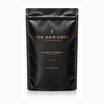
A supplement makes sense as a complement, never as a substitute for a varied diet. Hair Code combines biotin, zinc, selenium and copper with MSM, silicon and the amino acids L-Lysine, L-Cystine and L-Methionine, and is designed to be taken daily for at least three months, the time hair needs to show changes. If you want to understand the role of each amino acid, read why amino acids matter for hair growth.
Frequently asked questions
Why does more hair fall out in autumn?
Because more follicles enter the resting phase in summer, and those hairs are shed about three months later. A study of 823 women found the telogen peak in July, with shedding showing up in late summer and autumn.
How long does seasonal hair shedding last?
Usually a few weeks, often between six and eight. If it lasts more than about three months, see a dermatologist.
Does seasonal shedding make hair thinner?
No. The hairs that fall are replaced by new hairs growing from the same follicles. Real thinning is gradual and does not follow the seasons.
Can a supplement stop autumn hair loss?
No supplement stops a natural cycle. Biotin, zinc and selenium contribute to the maintenance of normal hair, which helps if your diet does not cover them, but they do not prevent seasonal shedding.
Sources
- Kunz M, Seifert B, Trüeb RM. Seasonality of hair shedding in healthy women complaining of hair loss. Dermatology, 2009.
- American Academy of Dermatology. Do you have hair shedding or hair loss?
- European Commission. EU Register of nutrition and health claims.
This article is for information only and does not replace medical advice. Food supplements should not be used as a substitute for a varied and balanced diet and a healthy lifestyle.