




Collagen Quality vs Quantity: What Actually Matters for Your Skin
Share
Two collagen supplements can list an identical "10g of collagen" on the front of the label and behave completely differently in your body. The difference usually comes down to three things: molecular weight, source, and what it's paired with.
Molecular weight and absorption
Native collagen molecules are too large to be efficiently absorbed through the gut. Hydrolysis — breaking collagen down into shorter peptide chains — is what allows it to actually be absorbed and used by the body. If a label doesn't mention "hydrolysed" or "peptides," it's worth asking what you're really getting.
Source matters more than marketing suggests
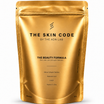
Bovine, porcine, and marine (fish) collagen all supply similar amino acid profiles, but marine collagen peptides tend to have a smaller average molecular size, which several studies associate with more efficient absorption — one of the reasons we chose hydrolysed fish collagen for Skin Code.
What it's paired with changes the outcome
Collagen synthesis in your body is vitamin C-dependent — without adequate vitamin C, the amino acids from collagen peptides can't be efficiently rebuilt into new collagen. Hyaluronic acid, meanwhile, supports the hydration side of skin health rather than the structural side. A well-paired formula addresses both; an isolated collagen powder addresses only one piece of the picture.
A quick way to read a label
Check for "hydrolysed" or "peptides," check the dose is measured in grams rather than milligrams, and check whether vitamin C is included. Those three details tell you more than the word "collagen" on its own ever will.